

Wastewater can be a valuable resource for public and environmental Health. Wastewater from our homes, toilets, and public infrastructure carries traces of pathogens, chemicals, and pollutants. It reflects the health of communities and is increasingly recognised as a critical tool for monitoring disease outbreaks, pollution levels, and risks to both ecosystems and human well-being.
During the COVID-19 pandemic, wastewater monitoring emerged as an effective method for early detection of viral outbreaks. It provided a fast, cost-effective, anonymous, and non-invasive alternative to clinical testing. By 2022, wastewater-based surveillance systems had been implemented in at least 55 countries.
But its value goes far beyond pandemics.
Wastewater surveillance helps identify land-based sources of pollution, informs ecosystem protection strategies, and supports the development of evidence-based policies to safeguard freshwater and marine environments. It plays a dual role in protecting public health and supporting the sustainable management of natural resources.
Highlights
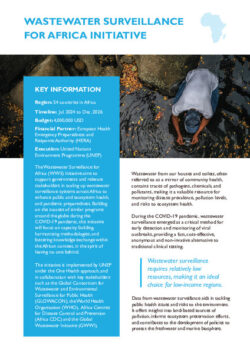
Wastewater Surveillance for Africa Initiative
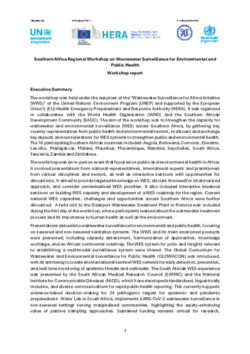
Workshop Report - Southern Africa Regional Workshop on Wastewater Surveillance for Environmental and Public Health
Workstream publications
Workstream events
No event scheduled
Questions about the workstream or you would like to be a member of the workstream, let us know by clicking on the button.